
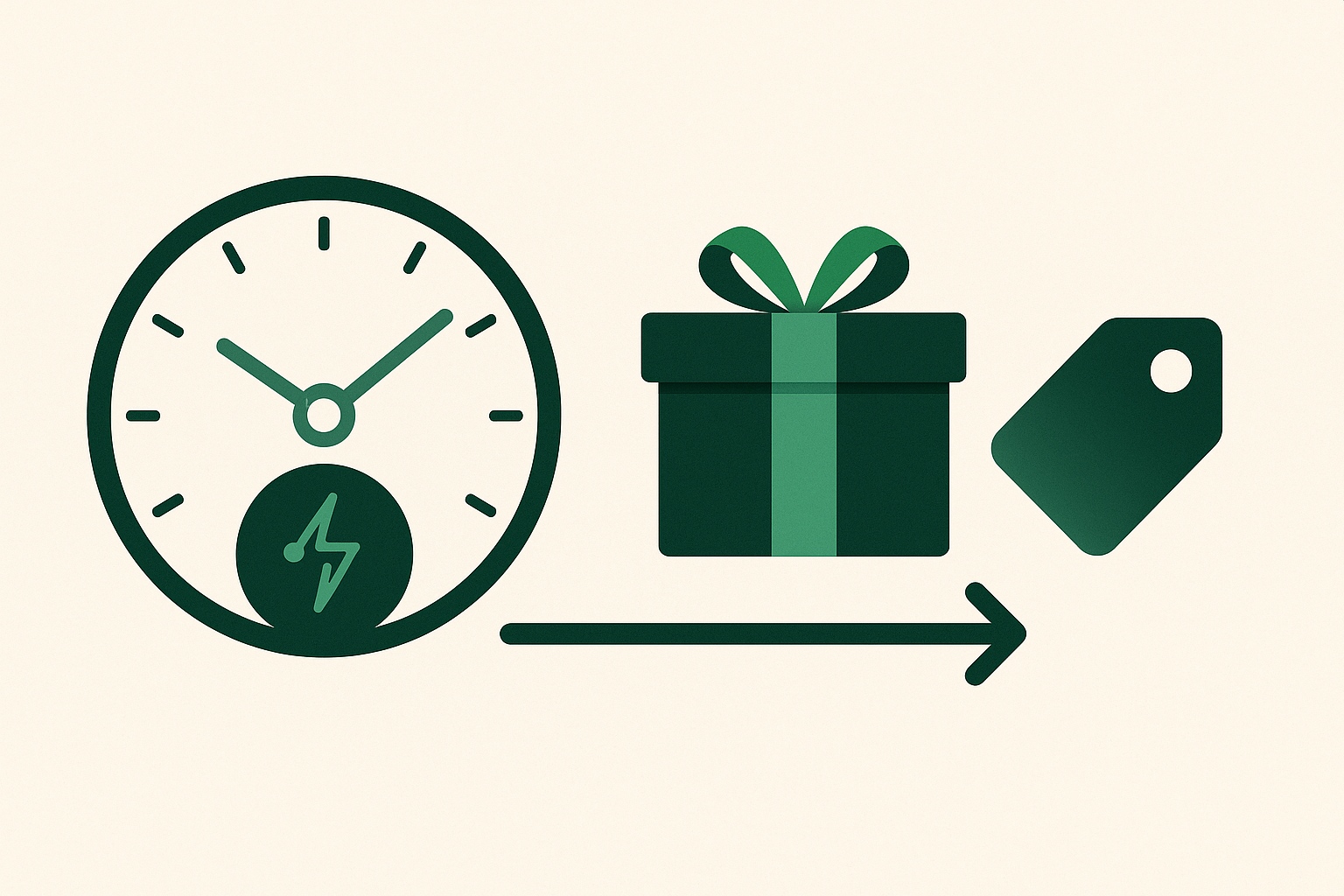
A coach spent six weeks building a micro offer.
Recorded eleven videos. Designed a workbook. Wrote a long sales page. Picked fonts.
Then he launched it and got two sales. Both from friends.
Six weeks of work to learn what a $50 ad test could have told him in a weekend: the market did not want that offer.
The waste was not the six weeks. The waste was the order. He built first and asked the market second.
The 30-day build created a bad habit
For years, building even a small offer took about a month. Outline the training. Record it. Edit it. Design the workbook. Write the page. Wire up the checkout.
A month of work is expensive. So coaches did the rational thing: they tried to de-risk it before building.
They polled their audience. They ran surveys. They asked “would you buy this?” in their Facebook group. They collected opinions like insurance.
Then they spent the month building, launched, and watched the same people who said “yes, definitely” buy nothing.
Opinions are free. That is the problem
A poll answer costs the person nothing. Clicking “yes I’d buy that” takes one second and zero dollars.
A $27 purchase costs something. Not much. But enough that the answer means something.
That gap is where launches die. You cannot validate an offer with words. You can only validate it with receipts.
A survey measures politeness. A checkout page measures demand.
The old excuse for relying on opinions was real: building the actual thing took a month, so you needed some signal before committing. Fair enough.
That excuse is now gone.
What AI actually changed
AI did not change how coaches sell. Trust still sells. Specificity still sells. Your method still sells.
What AI changed is the cost of finding out.
The production work that took a month now takes a day. Turning your framework into a structured workbook: an afternoon. Drafting the sales page from your own positioning: an hour, plus your edits. Formatting, outlining, checkout setup, thank you page: same day.
Which means the smallest real version of your offer can exist by tomorrow morning. And if it can exist by tomorrow morning, you no longer need anyone’s opinion. You can just ask the market directly, with a price tag attached.
The 24-hour build
Here is the shape of the day.
Pick one problem. Not your whole philosophy. One narrow, painful problem your clients already pay you to fix. The kind a stranger recognizes in two seconds.
Build one asset with AI. A workbook, a template pack, a swipe file, or one recorded training with a tight outline. Feed AI your framework, your steps, your examples. Let it do the drafting and formatting. You do the judging. Cut everything that does not sound like you.
Write the page. Short. The first seven lines do most of the work, so spend most of your page time there. One promise, one price, one button.
Price it low. Somewhere between $9 and $47. Low enough that a cold stranger can buy without a phone call. This is a validation instrument, not your payday.
Ship it to strangers. A small daily ad budget to cold traffic. Not your email list. Not your group. Your warm audience buys because they like you. Strangers buy because the offer works.
Then watch one number: buyers per day. Not clicks. Not comments. Not “this looks amazing.” Buyers. The benchmark that matters is three buyers a day.
What this is NOT
This is not “have AI generate a generic ebook and slap a price on it.” Buyers can smell that in one scroll, and a refund wave is not validation.
It is not skipping quality. The offer still has to deliver a real result. It just does not need eleven videos and custom fonts to deliver it.
It is not AI replacing your expertise. The expertise is the product. AI is the production crew.
And it is not a get-rich launch. A day that brings in $81 and proves cold strangers want your offer is worth more than a month that brings in zero and proves nothing.
The math of fast proof
Compare the two paths honestly.
The slow path: a month of building, launch, and if it misses you are out four weeks and most of your motivation. Most coaches get one or two of these attempts in them per year.
The fast path: one day of building, a week of small ad spend, and a clear answer. If it misses, you adjust the promise and test again next week. You can run more market tests in one quarter than the slow path allows in three years.
Validation was never a talent problem. It was an iteration problem. AI just handed you iterations for free.
The shift that matters
Stop asking “what should I build?” That question keeps you in your own head for months.
Start asking “what will strangers pay for?” Then use AI to make the answer arrive tomorrow instead of next quarter.
One problem. One asset. One low price. One day of building. Then let the market vote with its wallet.
Proof by Friday beats perfect by Christmas.
The full system behind this, designing micro offers that validate fast and feed the premium program behind them, is what we teach at Productized Coach. Start at productizedcoach.com.
Frequently asked questions
What is a 24-hour micro offer?
It is the smallest real version of a paid offer you can build in one focused day using AI for production: one narrow problem, one asset that solves it, one low price, one simple sales page. The point is not the day one revenue. The point is getting a true buying signal from strangers this week instead of guessing for a quarter.
Doesn't AI-built content feel generic?
It does when AI supplies the ideas. It does not when AI supplies the labor. The method, the examples, the stories, and the strong opinions come from you. AI formats, drafts, structures, and polishes. Buyers pay for your way of solving the problem. AI just removes the month of production that used to sit between your expertise and a sellable asset.
Why not just survey my audience before building?
Because answers are free and purchases are not. People say yes to polls all day and never pull out a card. A survey measures politeness. A checkout page measures demand. The entire reason to build fast is so you can skip opinions and go straight to the only signal that matters: strangers paying.
What should the micro offer cost?
Low enough that a cold stranger can say yes without a phone call. Most micro offers land between $9 and $47. You are not trying to get rich on the front end. You are trying to make the buying decision easy so the market can vote quickly, then earn the real money on the order bumps, upsells, and premium offers behind it.
How do I know if the offer is validated?
Buyers from cold traffic, consistently, on a small budget. The benchmark we teach is three buyers a day. If strangers buy at that pace, you have proof and permission to scale. If they do not, you change the offer, not the budget. Either way you learned it in days, not months.
Keep reading

May 19, 2026
3 Buyers a Day
Most coaches kill a new offer when the first launch breaks even. They just killed the proof. Validation is not about profit. It is about three buyers a day.
May 18, 2026
Be a Selfish Bastard
Most coaches build offers based on what their audience asked for. The ones who scale do the opposite — they teach what they want to teach. Here is why selfishness wins.
May 14, 2026
Get Paid to Create
Coaches build courses nobody asked for, then wonder why nobody buys. The ones who scale sell the thing first, then build it. Here is why.